WELCOME BACK TO THE STATES ANDY!!!!Dear 1st ANGLICO friends & families,
I would first like to say welcome home to all of our 1st ANGLICO warriors who just returned from a long deployment with the 13th MEU! By all accounts, SALT G did an absolutely superb job and had a very successful deployment. My hat’s off to the families of SALT G for making it through yet another deployment and providing the support to your loved ones in order to make it a successful deployment.
....the Marine Corps mandates that units returning from deployments set aside a period of time (usually five days) to decompress after making the significant change from the tactical environment back to normalcy—to our living rooms, with our wives, and our kids, too! We are planning “Warrior Transition” now with due respect to meeting the Commandant’s intent as well as to maximizing our free time to spend with our families and loved ones once we get home.
Lastly, your Marines and sailors continue to set the standard for outright professionalism and tactical effectiveness out here. Your loved ones are constantly setting the bar higher and higher for effectiveness in combat when it comes to air and surface delivered fires. You have much to be proud of! They are operating smartly and have a clear understanding of the mission at hand and that we will finish strong right to the end. Thank you so much for supporting these fine men and for being a part of 1st ANGLICO and our Corps!
Semper fidelis,
LtCol Brian T. Bruggeman, USMC
Commanding Officer, 1ST ANGLICO
To see the rest of the newsletter, click HERE
Wednesday, December 14, 2011
Friday, November 4, 2011
Almost Time for Andy to Come Home
Andy and the rest of the crew in 1ST ANGLICO will be coming home soon!!!
And they are partying down in San Diego!! 
Sunday, September 18, 2011
Medal of Honor Recipient Recalls Ambush
Dakota Meyer appears on 60 Minutes
What happened in the Ganjgal Valley in Eastern Afghanistan earned Dakota Meyer the Medal of Honor, but an investigation into the incident that killed four U.S. Marines and eight Afghan soldiers ended the careers of two army officers in charge that day.
View here: Dakota Meyer appears on 60 Minutes
Thursday, September 15, 2011
Highest Military Honor Awarded to Marine, Dakota Meyer
Dakota Meyer saved 36 lives from an ambush in Afghanistan and was awarded the nation's highest military honor, the Medal of Honor, on September 15.
Former Marine Sgt. Dakota Meyers, from Greensburg, Ky., was in Afghanistan's Ganjgal Village, Kunar province in Sept. 2009 in support of Operation Enduring Freedom. The 23-year-old Marine scout sniper repeatedly ran through enemy fire to recover the bodies of fellow American troops. He has since left the Marine Corps, but will become the first living Marine to be awarded the Medal of Honor for actions in Iraq or Afghanistan.
Sunday, September 11, 2011
Saturday, August 6, 2011


Tuesday, July 12, 2011
Army Ranger Gets Medal of Honor for Heroics in Afghanistan
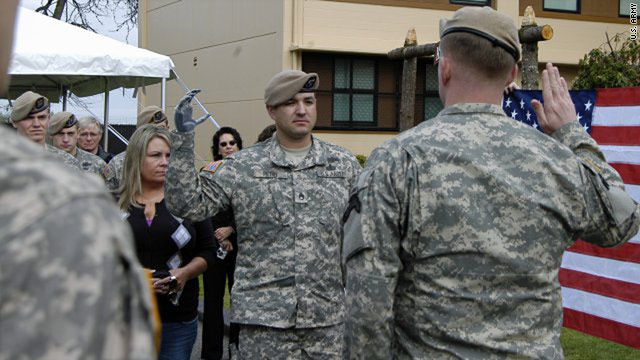
An Army Ranger who lost his right hand while tossing an enemy grenade away from fellow soldiers in Afghanistan has been awarded the Medal of Honor today.
Sgt. 1st Class Leroy Arthur Petry is the second living recipient of the Medal of Honor from the Iraq and Afghan wars, according to the U.S. military.
"It's very humbling to know that the guys thought that much of me and my actions that day, to nominate me for that," Petry said, according to an Army News Service report.
Petry is being awarded the medal for actions on May 26, 2008, in Paktia, Afghanistan.
Already wounded by a bullet that went through both his legs, Petry picked up an enemy grenade that landed near him and two fellow Rangers and threw it back toward the enemy, according to the Army News Service. The grenade detonated and amputated Petry's right hand. Petry applied a tourniquet to his wound and called for help.
"If not for Staff Sergeant Petry's actions, we would have been seriously wounded or killed," Sgt. Daniel Higgins, a fellow Ranger, wrote in a statement, according to the Army News Service.
Petry, now assigned to Fort Benning, Georgia, will be the ninth service member to be presented the Medal of Honor for actions in Afghanistan or Iraq. The other living recipient is Staff Sgt. Salvatore Giunta.
Petry, a father of four from Santa Fe, New Mexico, has served two tours of duty in Iraq and six in Afghanistan.
Monday, June 6, 2011
In Afghanistan, Marines Say Now's Not The Time For U.S. Pullout
U.S. Marines with Golf Company patrol with Afghan forces through a harvested poppy field in Northern Marjah, Helmand Province, Afghanistan.
Later this month, President Barack Obama is expected to announce just how many troops will be pulled out of Afghanistan starting in July. Whether the U.S. should still be engaged in Afghanistan has been hotly contested for years, but the budget crunch and the killing of Osama bin Laden has only intensified the debate.
Marines in the Golf Company agree that now is not the time to pull combat troops out of Afghanistan. Some Marines are OK with the president pulling out support troops like the construction battalion, but not combat troops.
Marines say they've made some gains against the Taliban and they finally have the right amount of troops... finally have everything they need. They finally feel like they're making progress. They just want more time.
The handoff to the Afghan military is complicated, because there are few well-trained units.
Sgt. John Maulder says if you've ever seen Afghan forces during a firefight, all they do is "pray and pray." To leave them now, he said, would just mean the country would descend into a "civil uprising" and the U.S. would just have to turn back around to help them.

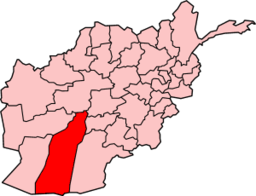
Helmand Province, Afghanistan
Helmand (Pashto/Persian: هلمند) is one of the 34 provinces of Afghanistan. It is in the southwest of the country. Its capital is Lashkar Gah. The Helmand River flows through the mainly desert region, providing water for irrigation.
Helmand is the world's largest opium-producing region, responsible for 42% of the world's total production. This is more than the whole of Burma, which is the second largest producing nation after Afghanistan. Afghan opium accounts for more than 90% of the global supply.
Much of the fighting between NATO and Taliban forces is taking place in this province and Helmand is said to be a Taliban stronghold.
Helmand has a southern border with the Balochistan province of Pakistan. Many domestic and international observers have criticized Pakistan's efforts towards securing the border against Taliban insurgents.

Sunday, June 5, 2011
Military Losses in Afghanistan: Joseph Gill and Bradley Justin Gaudet
 British Marine, Lance Corporal Martin Joseph Gill from 42 Commando Royal Marines died in Helmand province, Afghanistan on Sunday 5th June 2011.
L-Cpl Gill was on patrol in the Nahr-e-Saraj district of Helmand. His unit was attacked by enemy forces with small-arms fire from a compound. L-Cpl Gill was hit and despite receiving immediate first aid, died of gunshot wounds.
L-Cpl Gill joined the Royal Marines in April 2008 and was appointed to the Fleet Protection Group Royal Marines. Within a year, he was promoted to Lance Corporal and took responsibility for a four-man team, guarding the UK's nuclear deterrent. He moved to 42 Commando Royal Marines in September 2010.
US Army helicopter pilot, Bradley Justin Gaudet, a Warrant Officer serving with the 6th Cavalry Regiment, died on Sunday 5th June 2011 when his helicopter crashed in Afghanistan.
WO Gaudet was on his third tour of duty in Afghanistan.
He had returned home last month for his daughter's birth and went back to Afghanistan a few days later to finish his tour. He and his wife, Ginny, also have a 10-year-old daughter, Tealie.
Saturday, June 4, 2011
Ilyas Kashmiri, Deemed the New Bin Laden in 2010, Killed in Drone Strike
In an article in Newsweek (dated 10/23/2010) it was report that Ilyas Kashmiri, 47 has the experience, the connections, and a determination to attack the West—including the United States—that make him the most dangerous al-Qaeda operative to emerge in years.
Evil geniuses are a rare breed, even in the ranks of al-Qaeda.
U.S. intelligence has been watching Kashmiri’s rise to prominence closely. Kashmiri fought the Soviets in Afghanistan, and the Indians in Kashmir and in India itself. He also worked with the Pakistani intelligence service, but turned on Islamabad with a vengeance in 2003, trying to murder then-president Pervez Musharraf. Since then Kashmiri has been linked to planned attacks in Denmark, Germany, France, the United Kingdom, and the United States, most probably Chicago.
Born in the Pakistani-controlled section of Kashmir in 1964, this veteran terrorist lost an index finger and one of his eyes during the fight against the Soviets in the 1980s. In such photographs as exist, he’s often shown wearing aviator sunglasses. He reportedly changes the color of his thick beard frequently, and it may be white or dyed red with henna, or then again dyed black. But his imposing presence and the deference shown him can still make him stand out.
Kashmiri’s status as a bin Laden favorite has been obvious. Kashmiri rode in a new four-wheel-drive pickup truck flying a white flag. Most of the al-Qaeda leadership is from the Arab world, not South Asia, but Kashmiri attended nearly all the top-secret terrorist summits held in North Waziristan. He was the only non-Arab attending strategy sessions. He came to the most restricted meetings of the Arab mujahedin and he could go to meetings and to areas that were off-limits to some Arab al-Qaeda leaders.
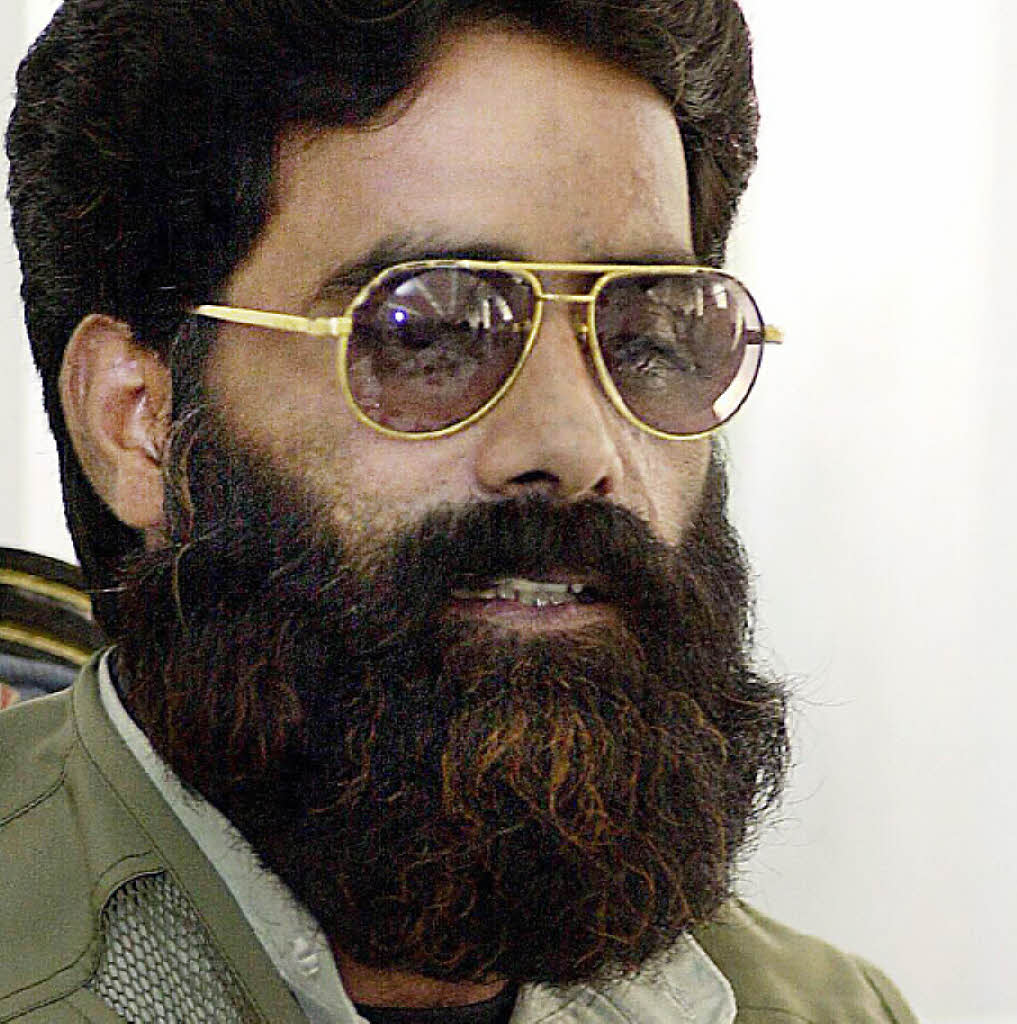
Ilyas Kashmiri killed in US drone strike
Monday, May 30, 2011
The 101st Airborne Takes On The Taliban in Afghanistan
On a freezing Afghan mountaintop, with Pakistan close enough to touch, No Slack battalion, the 101st Airborne, began it's descent. 
A US army soldier with the 101st Airborne Division Alpha Battery 1-320th throws a fragmentation genade as Combat Outpost Nolen on the outskirts of the village of Jellawar in the Arghandab Valley came under Taliban attack on Sept. 11, 2010. The 101st Airborne Division troops are in Afghanistan approaching a Taliban safe haven to attack them, April 4, 2011.
The Taliban were waiting in their safe haven -- a narrow mountain valley called Barawala Kalet. No foreign troops had ever dared to go there. With a five-hour barrage the Taliban were determined to convince the Americans to never come back.
Even though they were surrounded by gunfire, No Slack didn't budge. They gave back as good as they got, killing more than 100 of their enemy. But ammo was running low, and a tense voice on a field radio announced the cost of approaching the enemy.
"I have three casualties," said the voice over the radio. "I'll have more information when I get it."
Fire rained down from all directions. Captain, Ed Bankston, hugged a muddy mountainside, with the third platoon a short distance to the right and the first platoon to the left. All had wounded and dead.
Flying straight into enemy fire, Air Force parajumpers, known for their daring, attempted the first rescue. Their pilot was shot and their helicopter turned back.
"I have another casualty, they are all pinned down," said a voice coming from a radio transmission from the third platoon.
No Slack delivered a withering barrage of their own, temporarily quieting Taliban guns.
More Medivac helicopters poured into the valley. Seven medivac flights took place in two hours, although it was hard to get an exact number. When the clouds lifted, helicopters and bombers descended.
But in the chaos, there were miracles. Sgt. Matthew Mendez was saved by his chest plate.
"Took it like a champ," he said. "What happened? I got shot!"
"I got shrapnel in my a**," said another soldier. "My Tang bottle stopped it!"
Still, soldiers did not hesitate to run into fire to help a buddy.
"If you're not here, you'll never know," said Sgt. Joshua Frappier. "You can't really explain it to another person how you feel and what's going on in your mind."
"You got to put it out of your mind and keep going," said Sgt. Kellis Richardson.
Today, despite six dead and seven wounded, they are still going. Inch by inch, bullet by bullet.


Friday, May 27, 2011
Airman Killed in Afghanistan
Base officials from Hill Air Force base (Utah) announced Friday (May 27, 2011), the death of Sgt. Kristoff M. Solesbee of Citrus Heights, CA., an airman deployed in support of Operation Iraqi Freedom.
Solesbee, 32, was assigned to the 775th Explosive Ordnance Disposal Flight and died May 26 in the Shorabak district of Kandahar Province, Afghanistan, from wounds suffered when enemy forces attacked their unit.
Solesbee's supervisor, Sgt. Steve Hellenbeck is not at liberty to discuss the details of the mission, but said that Solesbee was energetic and quick-witted. He also concluded that Solesbee was on an operation to clear a weapons cache.
"His sacrifice and service are not forgotten and he will be greatly missed."
There is high praise for the Explosive Ordnance Disposal unit. It is one of the most dangerous assignments, but also saves many lives.
"They've really gone through some tough times. They're resilient. They're very proud of their mission and again, every day they serve with the mindset of 'we are here to save lives.' When they get hit by an (improvised explosive device), the first thing they want to do is get right back in the fight to keep saving lives."
Thursday, May 5, 2011
Andy Leaving for Camp Leatherneck, Afghanistan
Andy will be leaving for Camp Leatherneck on Saturday, May 7. His grandfather, who is a retired vet himself, will fly his flag that day for Andy. BE SAFE!!!
Camp Leatherneck is a 1,600 acre United States Marine Corps base located in Helmand Province, Afghanistan.
The forward element of the I Marine Expeditionary Force as Regional Command Southwest is currently based there. It is also home to 3rd Marine Aircraft Wing (Forward), 1st Marine Division (Command Element) or Task Force Leatherneck, 1st Marine Logistics Group and, I Marine Expeditionary Force Headquarters Group.

Saturday, March 27, 2010
U.S. Troop Deaths Double in Afghanistan

57 Were Killed in Action in First 3 Months of 2010, Twice That of Previous Year; Injuries More Than Triple
(AP) The number of U.S. troops killed in Afghanistan has roughly doubled in the first three months of 2010 compared to the same period last year as Washington has added tens of thousands of additional soldiers to reverse the Taliban's momentum.
Those deaths have been accompanied by a dramatic spike in the number of wounded, with injuries more than tripling in the first two months of the year and trending in the same direction based on the latest available data for March.
U.S. officials have warned that casualties are likely to rise even further as the Pentagon completes its deployment of 30,000 additional troops to Afghanistan and sets its sights on the Taliban's home base of Kandahar province, where a major operation is expected in the coming months.
"We must steel ourselves, no matter how successful we are on any given day, for harder days yet to come," Adm. Mike Mullen, chairman of the Joint Chiefs of Staff, said at a briefing last month.
In total, 57 U.S. troops were killed here during the first two months of 2010 compared with 28 in January and February of last year, an increase of more than 100 percent, according to Pentagon figures compiled by The Associated Press. At least 20 American service members have been killed so far in March, an average of about 0.8 per day, compared to 13, or 0.4 per day, a year ago.
The steady rise in combat deaths has generated less public reaction in the United States than the spike in casualties last summer and fall, which undermined public support in the U.S. for the 8-year-old American-led mission here. Fighting traditionally tapers off in Afghanistan during winter months, only to peak in the summer.
After a summer marked by the highest monthly death rates of the war, President Barack Obama faced serious domestic opposition over his decision in December to increase troops in Afghanistan, with only about half the American people supporting the move. But support for his handling of the war has actually improved since then, despite the increased casualties.
The latest Associated Press-GfK poll at the beginning of March found that 57 percent of those surveyed approved his handling of the war in Afghanistan compared to 49 percent two months earlier. The poll surveyed 1,002 adults nationwide and had a margin of error of plus or minus 4.2 percentage points.
Michael O'Hanlon, a foreign policy expert at the Brookings Institution, said the poll results could partly be a reaction to last month's offensive against the Taliban stronghold of Marjah in Helmand province, which the Obama administration painted as the first test of its revamped counterinsurgency strategy.
Some 10,000 U.S., NATO and Afghan forces seized control of the farming community of about 80,000 people while suffering relatively few deaths. But the Taliban continue to plant bombs at night and intimidate the locals, and the hardest part of the operation is yet to come: building an effective local government that can win over the loyalty of the people.
"My main thesis ... is that Americans can brace themselves for casualties in war if they consider the stakes high enough and the strategy being followed promising enough," O'Hanlon said. "But such progress in public opinion is perishable, if not right away then over a period of months, if we don't sustain the new momentum."
A rise in the number of wounded - a figure that draws less attention than deaths - shows that the Taliban remain a formidable opponent. 
The increase in casualties was partly driven by the higher number of troops in Afghanistan in 2010. American troops rose from 32,000 at the beginning of last year to 68,000 at the end of the year, an increase of more than 110 percent.
(Left: Army flight medic Sgt. John Collier treats a U.S. Marine aboard a Black Hawk helicopter in Marjah, Helmand province, Afghanistan, Sunday, March 7, 2010. The Marine was among two who suffered shrapnel wounds following an IED blast.)
"We've got a massive influx of troops, we have troops going into areas where they have not previously been and you have a reaction by an enemy to a new force presence," said NATO spokesman Lt. Col. Todd Breasseale.
The troop numbers have continued to rise in 2010 in line with the recent surge. Defense Secretary Robert Gates said Thursday that a third of the additional forces, or 10,000 troops, are already in Afghanistan. They plan to have all 30,000 troops in the country before the end of the year.
U.S. officials have said they plan to use many of the additional forces to reassert control in Kandahar province, where the insurgents have slowly taken territory over the past few years in an effort to boost their influence over Kandahar city, the largest metropolis in the south and the Taliban's former capital.
Many analysts believe the Kandahar operation will be much more difficult than the recent Marjah offensive because of the greater dispersion of Taliban forces, the urban environment in Kandahar city and the complex political and tribal forces at work in the province.
The goal of both operations is to put enough pressure on the Taliban to force them to the negotiating table to work out a political settlement to end the war - a process the U.S. believes will only gain momentum once the militant group has lost traction on the battlefield.
"Until they transition to that mode, then we will have fighters ready to take shots at us and plant IEDs (improvised explosive devices)," said Lt. Col. Calvert Worth Jr., commanding officer of the 1st Battalion, 6th Marines Regiment in central Marjah.


